Samuel Davis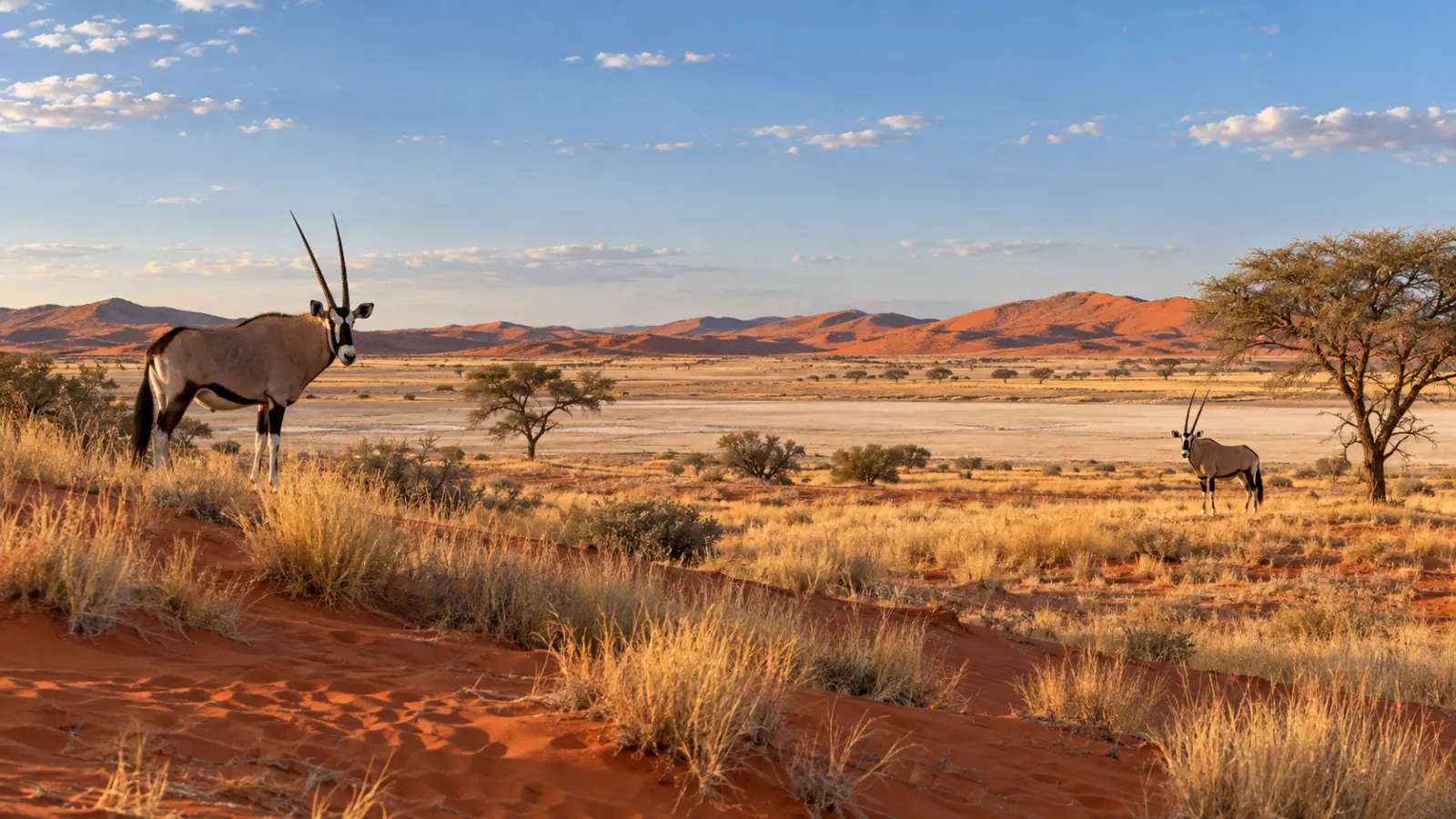
It is easy to arrive on safari with a list of animals and judge each day by how many names can be crossed off. The Kalahari rewards a slower kind of attention. A dry riverbed, the shade beneath a tree or birds moving between patches of ground can give an otherwise quiet journey its character. The landscape is not simply the background to a sighting.
For visitors taking part in a hunting trip time away from the organised programme can be an opportunity to appreciate that setting. Any additional activity should be agreed with the operator and permitted at the location. This article concerns observation and photography. It does not suggest that a national park permits hunting or that access rules are interchangeable across the region.
Begin by understanding where you are
The Kalahari is a region, not a single property with one set of facilities, rules or conditions. A description of one destination should not be treated as a promise about another. Ask your host to explain the landscape around your accommodation and the areas visitors may enter. Knowing that local context makes questions much more useful.
SANParks describes Kgalagadi Transfrontier Park as part of the Kalahari with arid conditions, dune vegetation and normally dry riverbeds. Its natural history information provides a regional introduction. The park is a protected destination with its own visitor arrangements; it is not a hunting concession. Use that information to understand an example of the landscape then confirm what applies to your actual itinerary.
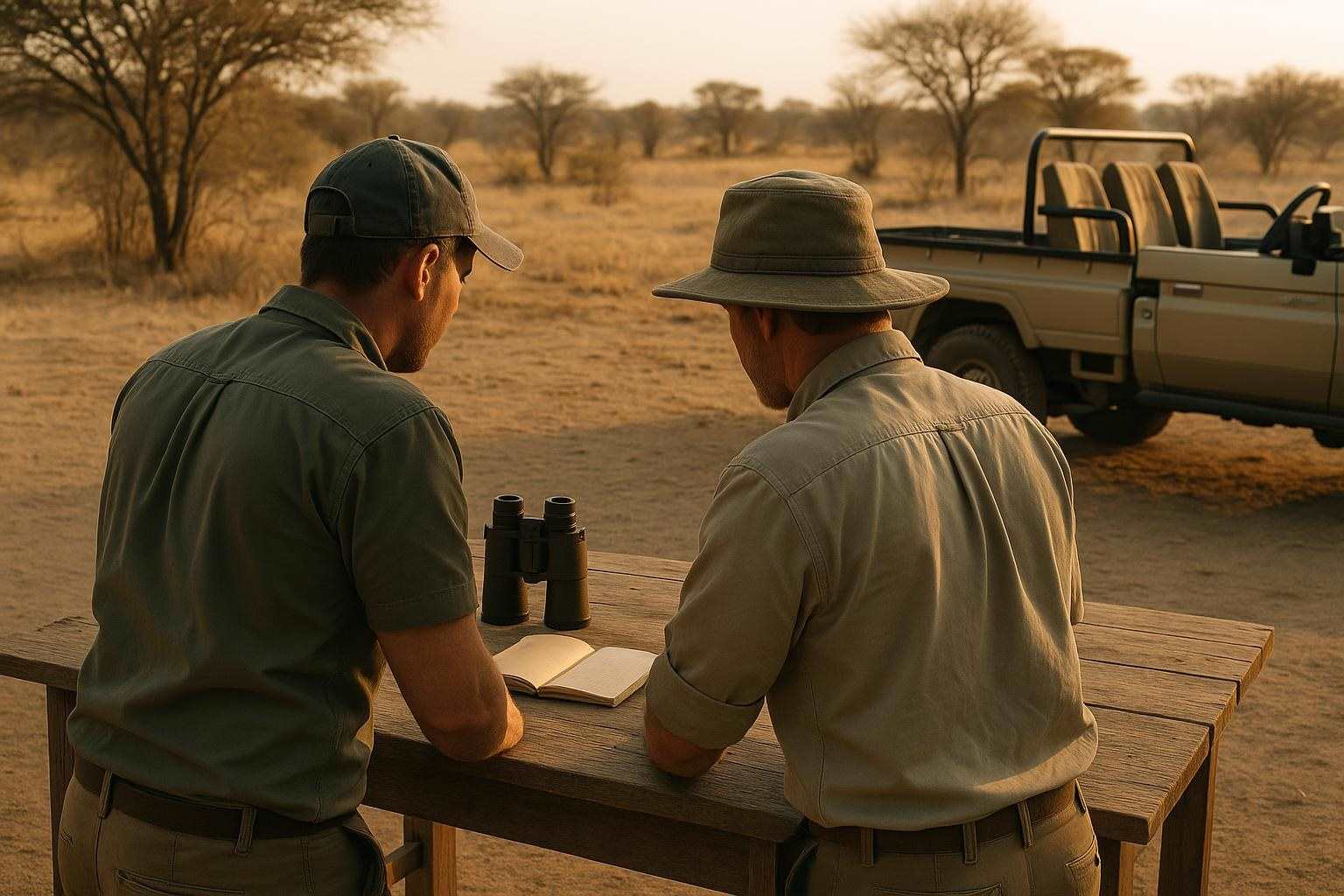
Before setting out for a drive or observation period clarify who is leading it and when the group is expected back. Ask about the conditions for remaining in or leaving the vehicle, permitted stopping places and any current restrictions. Do not infer permission from another vehicle’s behaviour. A visitor can appreciate a place carefully without testing the edge of every rule.
Read the scene in layers
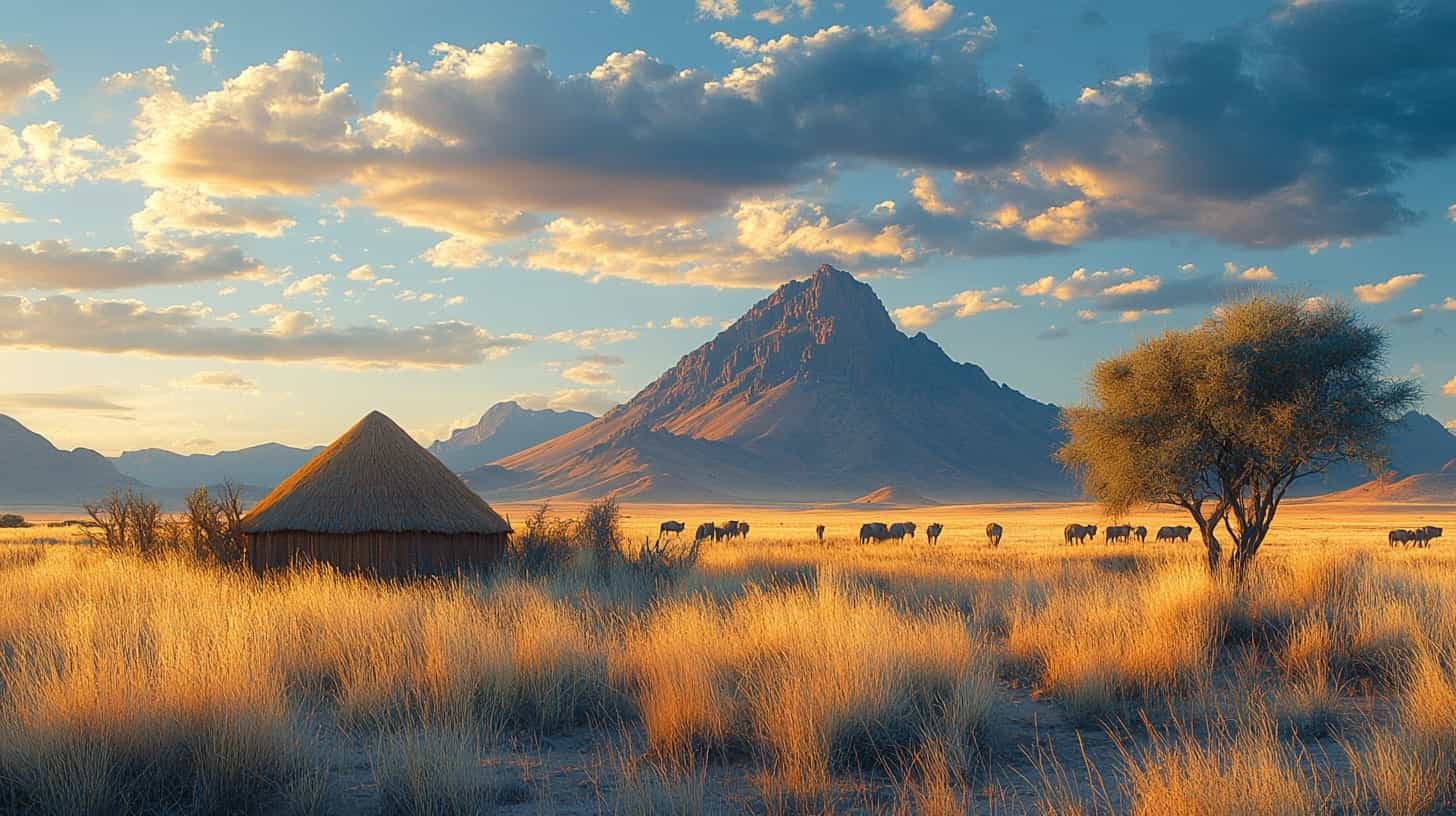
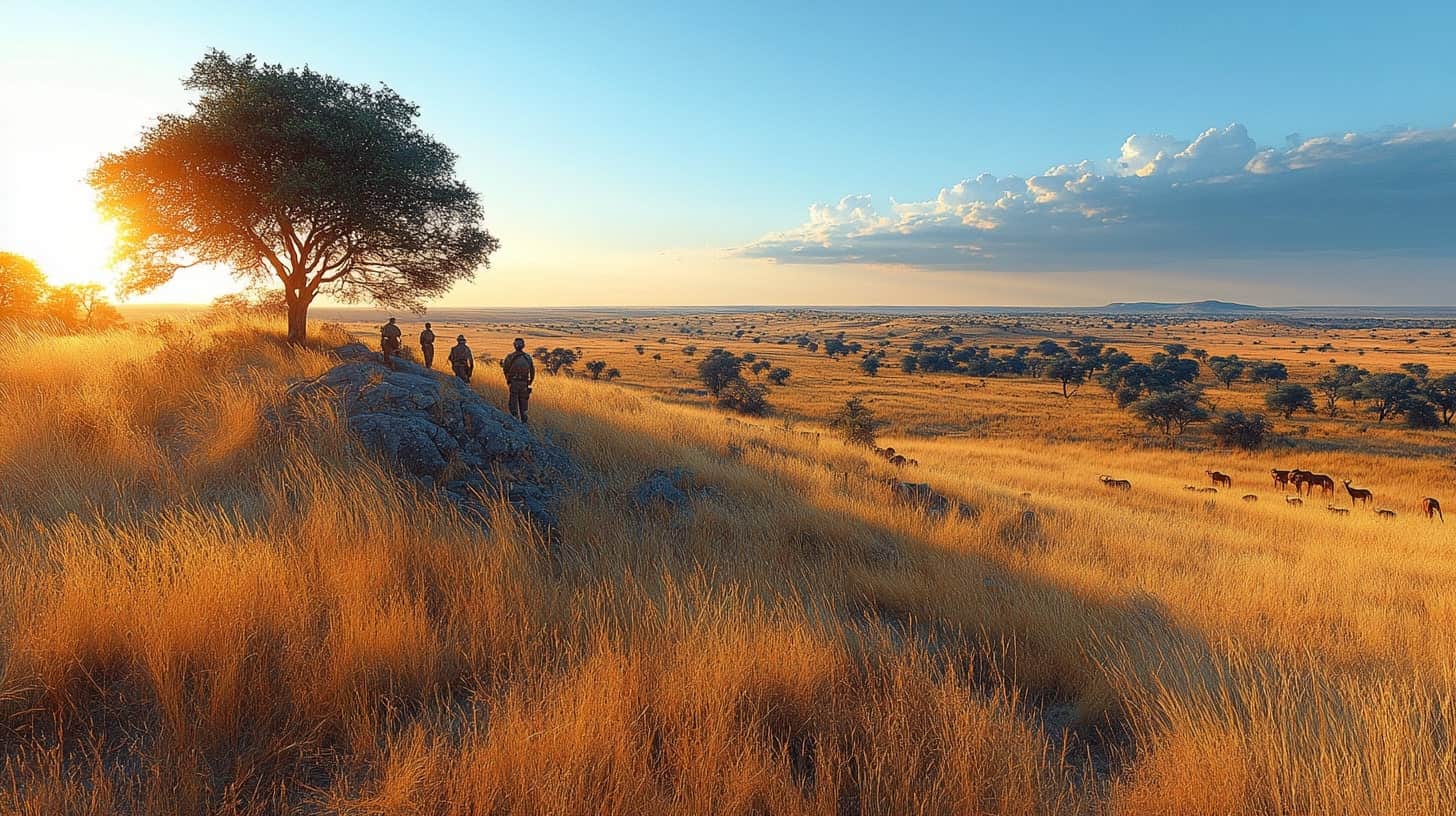
Start with the view as a whole. Notice the relationship between sand, grasses, scattered trees and lower ground. Then choose one area to watch for a while. This approach is less tiring than searching the entire horizon for a particular animal and it helps you recognise how much visual variety exists within a landscape that initially seemed uniform.
Light changes the appearance of that view. A slope that looked flat at midday may show its shape clearly when shadows lengthen. A photograph taken from the permitted stopping place at another time can feel entirely different without any change in the subjects. Ask your guide what can realistically be revisited rather than demanding a detour solely to recreate an image you have seen elsewhere.
Be cautious about explaining every pattern. A gap in the vegetation or a mark in the sand may invite a story but there can be several possible causes. Ask questions. Keep the distinction between an observation and an interpretation. A guide’s explanation can make the scene richer without requiring you to pretend you recognised everything on your own.
Give birds some of the day’s attention
Birds can make a quiet stop surprisingly engaging. SANParks identifies the Auob and Nossob riverbeds as places for bird activity within Kgalagadi. That is context for visitors to that park, not a guarantee of any particular sighting on a wider Kalahari itinerary. At your destination ask which common birds are reasonable to look for and how to observe them without disturbance.
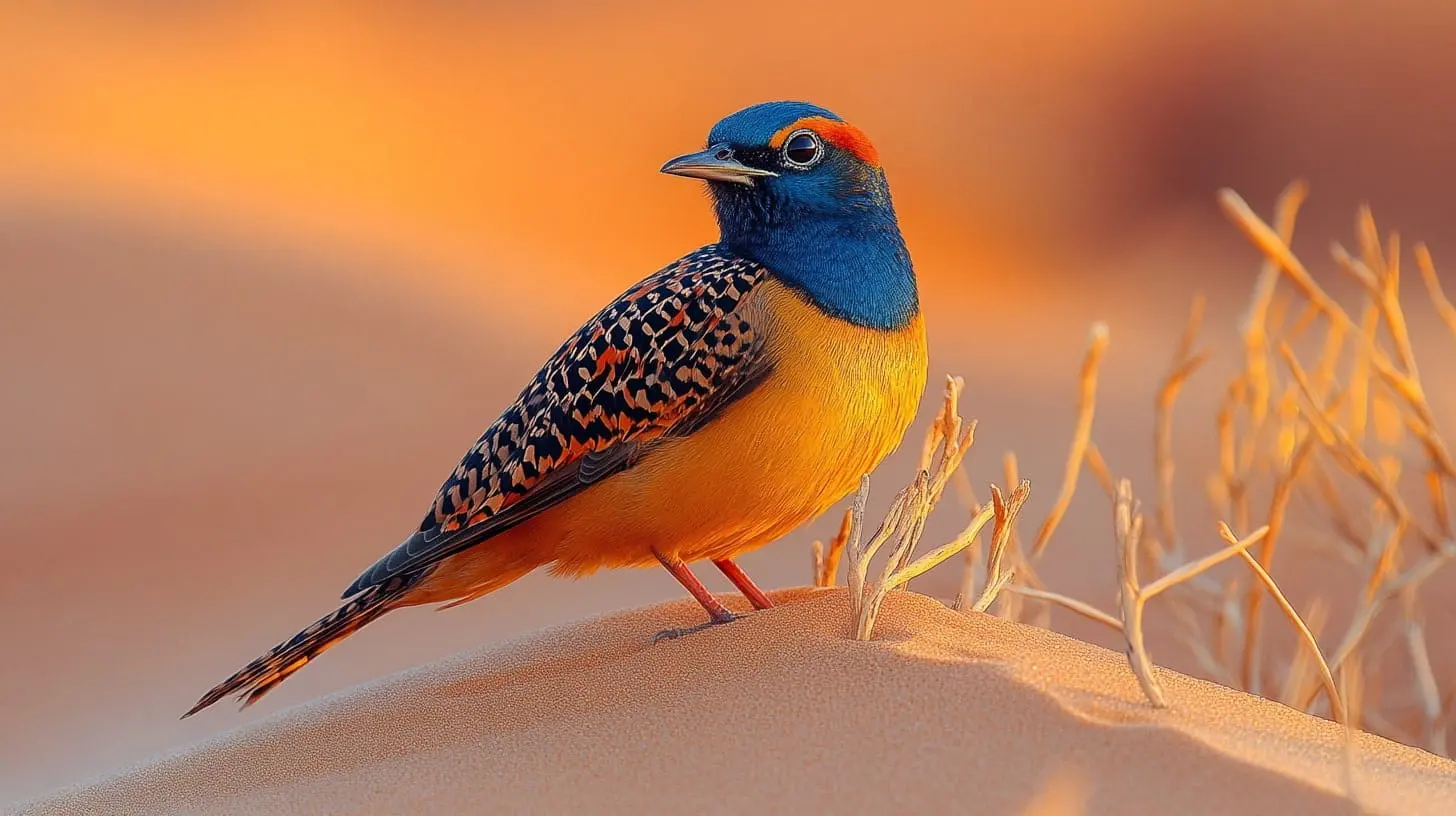
Begin with behaviour and shape rather than a race to name every bird. Notice whether it is on the ground or a branch whether it moves alone or with others and which features you can see clearly. If a guide supplies a name repeat it back and note it later. A tentative identification is more useful than a label that becomes attached to every similar photograph.
You do not need to turn a holiday into a bird survey. A few minutes spent watching one familiar individual can reveal more than a list assembled in a hurry. Avoid playback, feeding or attempts to move an animal into a position. When a subject disappears from view let that be the end of the observation rather than a reason to follow it off the permitted route.
Photograph the setting as well as the animal
A close portrait and a wider environmental photograph answer different questions. The portrait may show markings clearly; the wider frame shows where the animal was and how it related to the land around it. Try making room for both kinds of picture when circumstances allow. An image with a small subject can still be compelling when the light and setting are well observed.
Choose the frame from an approved position. Leave space around the subject. A tree, dune line or patch of shade can give the photograph structure without requiring you to approach closely. If the scene is beyond the reach of your equipment enjoy it directly. Not every worthwhile sighting needs to produce a picture for a large screen.
Keep expectations realistic. Wind, haze, distance or an animal facing away may prevent the image you imagined. Do not ask a driver or guide to compromise safety or visitor rules to solve a photographic problem. A missed photograph is a part of watching wildlife. The alternative is often a memorable picture obtained at an unreasonable cost to the subject or the group.
Make a quiet stop comfortable for everyone
People enjoy different amounts of waiting. One visitor may be absorbed by a bird while another is tired or struggling with the heat. Agree on a stopping period and let the guide know if somebody needs a break. The best observation stop is one the group can enjoy without pressure to demonstrate patience.
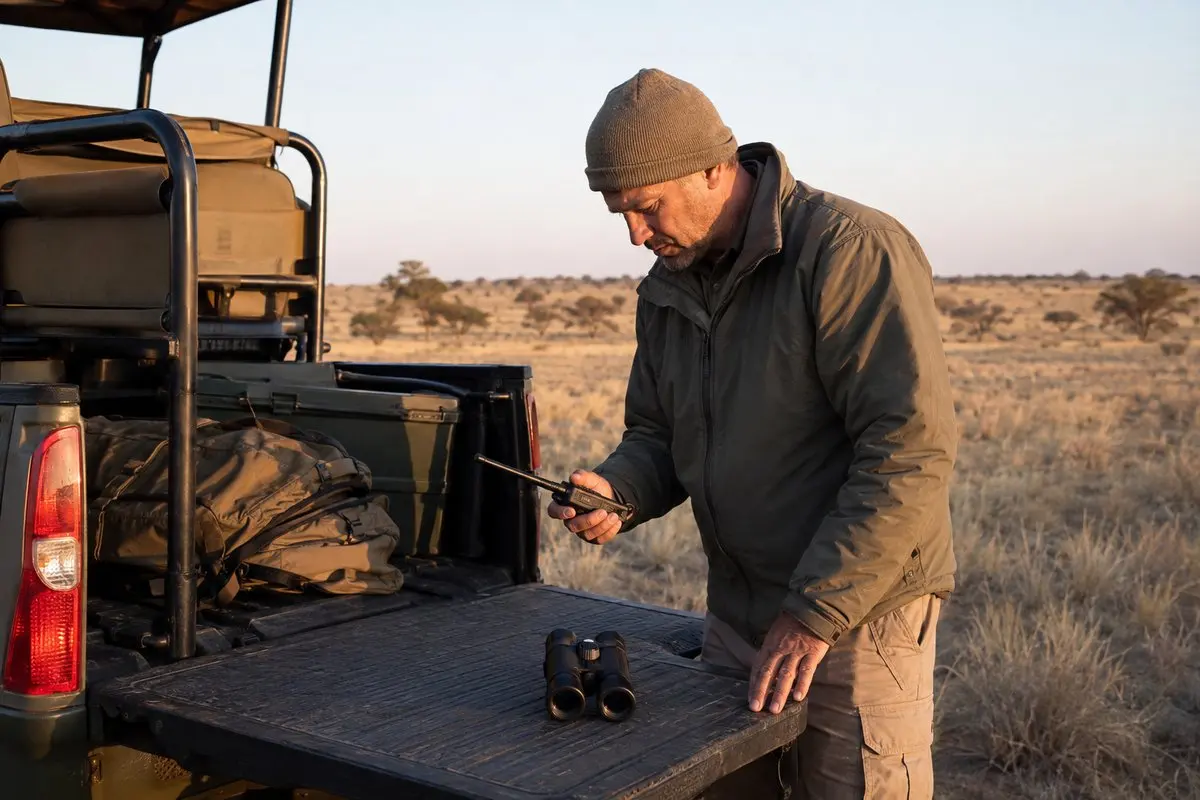
Prepare according to the operator’s advice for the conditions and planned duration. Keep personal items accessible without repeatedly unpacking the vehicle. Avoid leaving belongings where they can blow away or interfere with other passengers. When an item falls outside an approved stopping area ask the guide what to do rather than stepping out automatically to retrieve it.
Silence can improve an observation, but it should not become a social performance. A brief question or a whispered identification is part of learning. What matters is avoiding disturbance and allowing others time to look. If you have been using a shared pair of binoculars or a viewing position remember that the next person may not yet have seen what you are describing.
Bring the landscape back into the evening conversation
An evening discussion need not be limited to the day’s headline event. Ask about a tree you kept seeing a bird you could not identify or the difference between the ground near camp and the country visited earlier. Specific questions give a guide an opportunity to explain detail while broad requests to tell you everything can be difficult to answer.
When you sort photographs keep a few frames of ordinary surroundings rather than deleting everything without a prominent animal. They can help you remember the scale of the place and the conditions in which the trip unfolded. Label locations accurately and respect any request not to publish a precise position. If a caption contains a species identification verify it before presenting it as certain.
The quieter day is not a consolation prize for a day filled with sightings. It is a way to experience the same journey. By paying attention to the landscape accepting the limits of an observation and giving subjects time you come home with a fuller understanding of where you have been. That remains valuable long after a checklist has been put away.